Posts

Showing posts with the label Carlos Reygadas

Carlos Reygadas: In Search of a New Time (Yaroslav Vasiutkevych)

Image
I've invited Yaroslav Vasiutkevych to write a letter to introduce the 2026 re-edition  (revised and updated) of his 2024 book on Carlos Reygadas ( Carlos Reygadas: In Search of a New Time ). It is illustrated by his daugther,  Zlata Vasiutkevych, with beautifully eerie paintings from Reygadas's photograms.   It is available in English, but also in Spanish, in Italian and in Ukrainian (see the QRcodes on page 2 of the English version linked above). Illustration from the book : Zlata Vasiutkevych Yaroslav Vasiutkevych writes : Carlos Reygadas: In Search of a New Time When I first encountered the films of Carlos Reygadas, for a long time I placed them alongside other works of auteur cinema, cinema that positions itself in opposition to genre conventions and, above all, to the tradition of American filmmaking. Long takes, weakened narrative, the absence of conventional plot dynamics, and the slow unfolding of events on screen can all be found in the work of many filmmakers op...

Cinéma de la patience (Louise Ibáñez-Drillières)

Récent ajout de thèse à la page Bibliothèque de Unspoken Cinema :  FRANCAIS : "Cette thèse se consacre à l’étude de trois filmographies contemporaines hispaniques et hispano-américaines encore relativement peu étudiées en France : l’œuvre du réalisateur mexicain Carlos Reygadas (Mexico, 1971), celle du cinéaste catalan Albert Serra (Banyoles, 1975), et celle du cinéaste argentin Lisandro Alonso (Buenos Aires, 1975). Par leur traitement réaliste du temps et par l’économie d’action qui préside à leur composition, ces trois filmographies apparaissent comme des contre-points radicaux à une relation consommatoire aux images. Elles définissent les coordonnées d’un rapport alternatif aux films, posant de facto la question de savoir en quoi consisterait un voir viable et vivable, c’est-à-dire une perception qui ne serait de l’ordre ni de la consommation, ni de la simple reconnaissance, ni de la capture.Ces cinémas, en sollicitant la patience de leur public sur le mode d’une démobilisatio...

Carlos Reygadas | Intuitive Cinema (Approach)

Image
  Carlos Reygadas | Intuitive Cinema (YouTube) 7'49" (Approach) 15 Nov 2021

Slow Cinema (Annabel Greig) Video Essay

Image
  Slow Cinema (YouTube) 5'16" Video Essay (Annabel Greig) 25 may 2018

Slow Cinema and Carlos Reygadas's Silent Light (Jordan Schonig)

Image
  Slow Cinema and Carlos Reygadas's Silent Light (Jordan Schonig) 10' 6 dec 2020

Stellet Licht by Carlos Reygadas (Luke Cox)

Image
  Stellet Licht / Silent Light by Carlos Reygadas (video essay by Luke Cox) 5' International Cinema 2 - option 2a (14 Feb 2018) "A video in which you explain and critically evaluate the recurring characteristics of the overarching cinematography and/or other stylistic elements in one particular film by using several scenes from that film."

Venice Film Festival 2018

Image
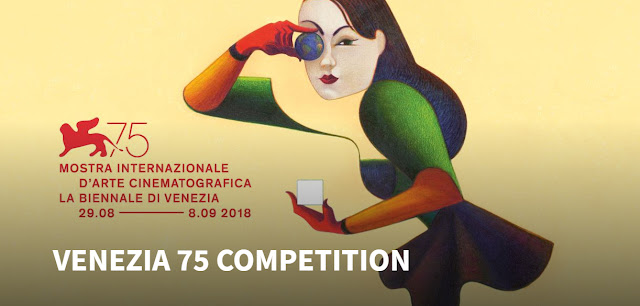
Today was announced the line-up for the 75th Venice Film Festival (August 29th - September 8th 2018) Surprise : Tsai Ming-liang brings a new film, Ni De Lian / Your Face (documentary on Lee Kang-Sheng), 76 min, out of competition !!! New Carlos Reygadas, Nuestro Tiempo (fiction) 173 min, in competition, Reygadas plays in his film! New Frederick Wiseman, Monrovia, Indiana (documentary) 223 min, out of competition, New Sergei Loznitsa, Process (documentary) 125 min

Rethinking Transcendental Style in Film | Paul Schrader

Image
Fuller Studio : 26 April 2018 Paul Schrader : "Tarkovsky's films mark a deviding point in the history of Durational Cinema. Before Tarkovsky, the use of withholding and distancing devices which Deleuze calls "Time Image", took place in the context of commercial theatrical cinema. Transcendental Style falls into this category. After Tarkovsky the use of these devices became increasingly exagerated, and their films fell into the domain of film festivals and art museums. The 3 sec Bresson's shot of a door became a 10 min static view of traffic. Transcendental Style had morphed into the hydra-headed monster we call "Slow Cinema". Without going into length, I'd just say that Slow Cinema refers to films of considerable length where very little happens. [...] This is why I say it's outside the perview of commercial cinema. Cinema in my opinion is inherantly narrative." Paul Schrader : "To me when movies move away from their narrati...

NYT's 25 Best Movies of the 21st Century

Amongst  the New York Times' 25 Best Movies of the 21st Century  are : A Touch of Sin (Jia Zhangke) Silent Light (Reygadas) Three Times (HHH) Timbuktu (Sissako) Wendy and Lucy (Reichardt) 5 Contemplative films out of 25, that's 20% of the best of the century (so far).  Not bad for a mainstream journal that publishes Dan Kois ( the bored philistine ).

Pour un cinéma contemporain soustractif (Antony Fiant)

Image
Pour un cinéma contemporain soustractif Antony Fiant (Juin 2014) extrait PDF  / Site de l'éditeur Résumé : Depuis le début du XXIe siècle, on observe l'apparition régulière de films minimalistes manifestant une réticence marquée envers le scénario, le récit, la parole, la musique et la psychologie. Qu'ils relèvent de la fiction, du documentaire, ou des deux à la fois, les films de quinze cinéastes du monde entier (Lisandro Alonso, Wang Bing, Alain Cavalier, Pedro Costa, Darejan Omirbaev, Béla Tarr, entre autres) sont ici analysés d'un point de vue esthétique et dramaturgique pour mieux mettre en évidence un geste soustractif. Moins d'histoire, moins de dialogues, moins de décors, ces caractéristiques manifestent une belle foi en l'art du cinéma et en sa capacité de suggestion. Cet ouvrage veut réaffirmer les spécificités d’un art de la mise en scène, de l’espace et du temps. Force est de constater la présence dans le cinéma le plus contemporain (i...

Tarr's Film Academy 2013

Tarr Béla : "While there are more and more images everywhere around us, paradoxically, we perceive the increasing devaluation of this beautiful language every day. It is in this context that we are seeking to demonstrate, emphatically and convincingly, the importance of visual culture and the dignity of the image to the coming generation of filmmakers. Our aspiration is to educate mature filmmakers who think responsibly, with the spirit of humanism, artists who have an individual outlook, an individual form of expression and who use their creative powers in the defence of the dignity of man. Sarajevo offers the right home for this program as a multicultural city that is young and vibrant." * * * Hungarian arthouse director Bela Tarr is opening a PhD-level filmmaking academy in Sarajevo, Bosnia and Herzegovina. The Film Factory , housed in Sarajevo University's School of Science and Technology , will bring together some of the world's top directors to teach a...

Carlos Reygadas (Cannes 2012)

Image
Carlos Reygadas : "When a film is made, you try to share what you feel, what you think, what you imagine... I don't think there are any limits, but one's own limits. I do have limits, but I do feel totally free. So I think I do make perfectly normal, easy films. that is not a sea-change in comparison with standard films. [..] About narrative, I try to make very realistic films. We as human being, we have images from the past, dreams, memories, fantasies, projected future which mostly doesn't come as we imagined it... We don't change from one to another with a code in ordinary life. So I didn't want to use a code in the film. I think the public is very wise and moving very fast in cinema. There is no need for such codes anymore.  So I didn't want anything that would make you (public) connect directly what is the future, what is the past, what is imagined, what is fantasy.   As it happens in our own lives, as in our own heads. That's why I respect th...

Meditation vs Contemplation 2

Spot the differences: Meditation Contemplation Opening shot of Carlos Reygadas' Stellet Licht (2007) Related: Meditation mode? (bore) Meditation vs Contemplation 1